
Legal design is the application of human-centered design to the world of law, to make legal systems and services more human-centered, usable, and satisfying. –Margaret Hagen, Law By Design
Legal design is an idea that says that the law needs to reach out to people, instead of making people come to the law. If people in legal need are told to figure it out on their own, they’ll get nowhere. All the resources in the world could be available for them, but if they don’t know about those resources or how to get them, then those resources are totally useless.
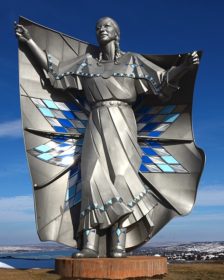 So a great way to apply legal design is to use it to help under-represented populations get the access to justice they need. In Montana, where I am right now, the most marginalized groups are the Native American tribes. Many of the tribe members have legal issues with no information about the resources available to them.
And there are several resources available. The University of Montana offers a tribal law clinic for civil and criminal matters. Montana Legal Services Association offers help in all civil matters, and some criminal matters for certain tribes. There’s even a government website that puts all the basic legal information for each tribe in one place.
But many, if not most, tribal members have no idea how to access these resources. Solutions like apps wouldn’t be useful because of the spotty cell service on reservations and require the upfront cost of a smartphone. So how can we make access to these resources more human-centered, usable, and satisfying?
- One option could be to set up kiosks on reservations that link to the MLSA and indianlaw.mt.gov websites, and offer ways to contact MLSA and the UM tribal law clinic. This doesn’t need to be expensive. Any basic functioning computer could be turned into a kiosk. We could ask for donations of old computers, and make this project even cheaper.
- Another option could be to use social media. Social media is already widely used by tribes to communicate with their members. The Nez Perce tribe in Idaho has been known to even deliver summons for civil matters by direct message on Facebook. If you look up the tribes on Facebook, you’ll find pages letting the community know about local events, the latest developments in government, and more. We could connect with these pages to let people know about the legal resources available for them.
These are just a few quick legal design ideas to get more access to justice out to the Native Tribes in Montana. Have any more ideas? Or suggestions on the ideas above? Comment down below!